

Picking out the right look for your online space makes all the difference when it comes to attracting potential clients. A well-chosen theme can really elevate your property showcase, making each listing pop in a crowded market.
Start by considering how responsive design plays a role; it’s important for your site to shine on any device.
That way, whether someone’s browsing on their phone or a desktop, the user experience remains seamless and enjoyable.
Don’t overlook the importance of user-friendly navigation, as you want visitors to sail effortlessly through your offerings.
Customization options also come into play, giving you the chance to mold the design to echo your real estate design, website themes, and property showcase, ultimately enhancing the user experience.
Here’s a detailed table on How To Choose a Theme for a Real Estate Website, outlining the key criteria and what to look for when selecting a theme:
| Criteria | What to Look For | Why It Matters |
|---|---|---|
| Property Listing Features | Integrated listing system, property types, map support, and listing filters | Essential for displaying and categorizing real estate properties |
| IDX/MLS Integration | Support for IDX plugins or built-in IDX/MLS integration | Enables real-time property listings synced from multiple listing services |
| Advanced Search & Filters | Search bar with filters for location, price, type, number of rooms, etc. | Enhances user experience and helps visitors find properties quickly |
| Responsive Design | Fully mobile-optimized layout and features | Ensures usability on smartphones and tablets, which many buyers use |
| Speed & SEO Optimization | Fast loading, schema markup, SEO-friendly code | Improves search engine rankings and user experience |
| Interactive Map Support | Google Maps or OpenStreetMap with property pins and geolocation | Helps users visualize property locations |
| Easy Customization | Theme options panel, drag-and-drop builder support (e.g., Elementor) | Lets you brand your site and modify layouts without coding |
| Agent Profiles & Contact | Agent listings, biography pages, and integrated contact forms | Builds trust and enables direct communication |
| Blog & Content Support | Blog templates to share real estate tips and news | Drives organic traffic and builds authority |
| Lead Capture Tools | Contact forms, newsletter signup, popups, CRM integration | Converts visitors into leads |
| Design Quality | Clean, modern, and professional look with real estate branding | First impressions count—professional design helps earn client trust |
| Multilingual & RTL Ready | WPML compatibility or built-in language switcher | Important for multilingual real estate audiences |
| Plugin Compatibility | Works well with real estate plugins (e.g., Estatik, Realtyna, IMPress Listings) | Ensures expandability and functionality |
| Demo Import | 1-click demo import for real estate starter sites | Helps you get started quickly |
| Support & Documentation | Good developer support, tutorials, and user guides | Saves time and ensures smooth theme setup and usage |
Understanding Real Estate Design Basics

When diving into the world of real estate, design plays a pivotal role that can’t be overlooked. A responsive layout makes your site adaptable, ensuring it looks great on all devices and enhancing visitor navigation.
Think about how your choice of color schemes can elevate aesthetic appeal; picking the right colors can truly draw in potential buyers.
An organized layout allows visitors to effortlessly find property details, making their journey smoother.
Additionally, template selection can markedly influence site functionality, ensuring users have a seamless experience. Each of these elements contributes to how effectively your real estate business stands out in a competitive market
How To Evaluate Website Themes?
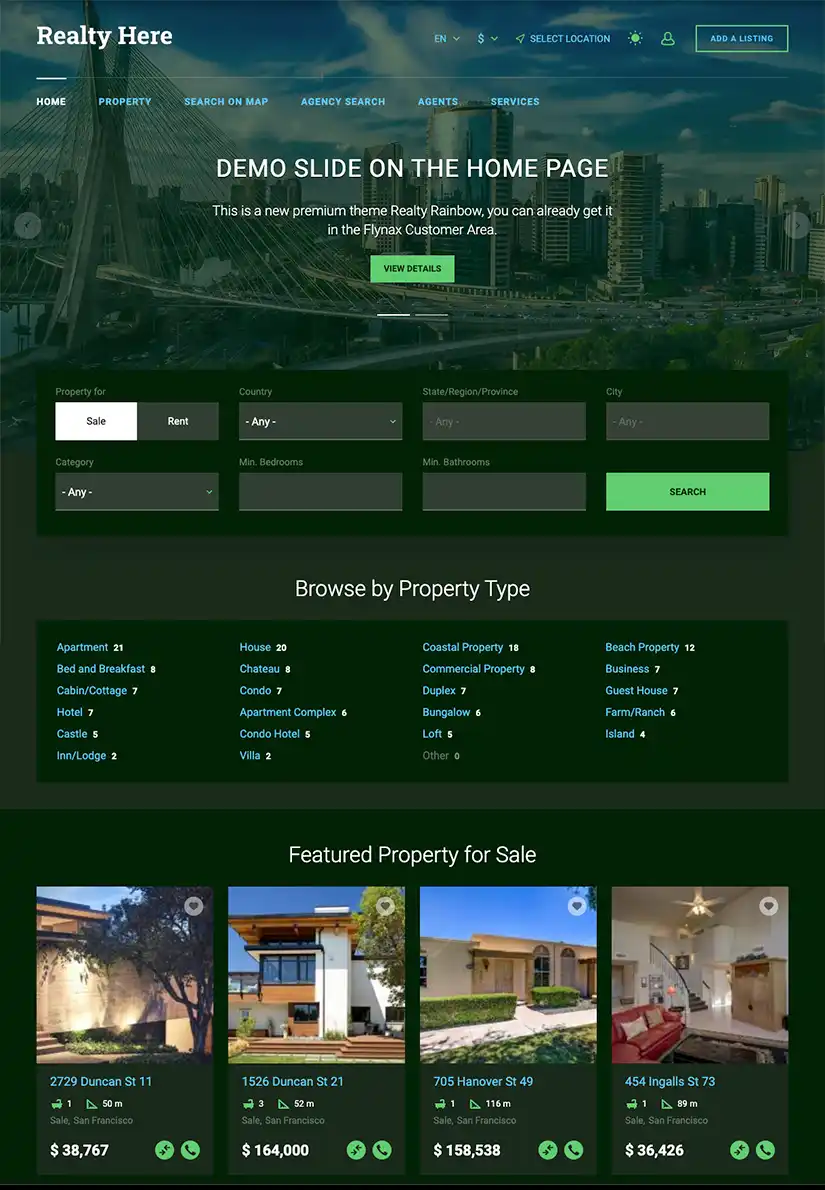
Choosing the right theme for your website is more than just picking something pretty; it’s about finding a fit that truly aligns with your goals. Start by evaluating how well the theme captures your branding—it should speak to your audience and create an immediate connection.
When it comes to color schemes, think about how they affect your online visibility; the right palette can make your site pop and draw users in.
Aim for a design that feels welcoming yet carries a professional undertone.
Functional aspects are just as important! You’ll want seamless integration of features like property listings along with a robust content management system to keep things running smoothly.
And don’t forget about those built-in SEO strategies—they can significantly impact how discoverable your site becomes, enhancing your branding and online visibility, while aligning with your chosen color scheme and effective content management practices.
Here’s a comprehensive table of the Best WordPress Themes for Real Estate Websites, comparing their features, pricing, and suitability:
| Theme Name | Price | Key Features | IDX/MLS Support | Best For | Free Version? |
|---|---|---|---|---|---|
| RealHomes | $69 (ThemeForest) | Advanced search, front-end submission, Google Maps, Elementor/Visual Composer | Yes | Realtors, property listing sites | No |
| Houzez | $69 (ThemeForest) | Property management system, CRM features, lead capture, drag-and-drop builder | Yes | Agencies, real estate portals | No |
| WP Residence | $69 (ThemeForest) | Custom fields, membership system, payment integration, Elementor support | Yes | Multi-agent platforms | No |
| HomePress | $69 (ThemeForest) | uListing plugin, map search, 1-click demo, mortgage calculator | Yes | Modern property showcase | No |
| EstateEngine | $89 (EngineThemes) | Monetization options, front-end control, user submissions | Yes (basic) | Paid real estate directories | No |
| Astra | Free / Pro from $59 | Lightweight, compatible with real estate plugins like Estatik or IMPress | Via plugin | Small agencies, fast websites | Yes |
| Divi | $89/year or $249/lifetime | Visual builder, highly customizable, real estate layout packs | Via plugin | Stylish personal brands or agencies | No |
| Realtor | $49 (TemplateMonster) | Bootstrap-based, mobile-friendly, homepage map search | Basic (manual) | Independent agents | No |
| MyHome | $59 (ThemeForest) | Live search, compare properties, user dashboard | Yes | Agencies with many properties | No |
| WP Real Estate | Free / Pro from $99 | Clean design, built-in listings, agents module | Yes (Pro) | Minimalist and functional websites | Yes |
Importance Of Responsive Layout In Real Estate
Having a well-structured website is key for showcasing properties effectively. A mobile-friendly design guarantees that potential buyers can explore listings with ease on any device.
With many users searching for homes on their smartphones, providing a seamless experience can truly influence their decisions.
Visual hierarchy becomes important here, making it simple for visitors to find what they need.
When users can easily access crucial information, they are more likely to engage, enhancing your lead generation efforts through effective calls to action.
Search engines also favor sites that offer a responsive layout, which boosts your visibility in search results. Statistics reveal that websites with a mobile-friendly design tend to experience higher engagement rates, leading to greater traffic and potential conversions. If your design falls short, you might miss out on effective lead generation due to poor mobile-friendly design, weak visual hierarchy, unclear typography, and ineffective calls to action.
Customization For Branding And Aesthetic Appeal

The appearance of your website reveals much about your brand identity. Crafting your site’s design to reflect your personality can make a significant difference in how visitors perceive you.
Think about how colors, fonts, and imagery play a role in showcasing your values and attracting your ideal audience.
For instance, using vibrant colors can resonate with a younger demographic, while softer shades might be more appealing to a mature crowd.
Moving on to aesthetic elements, establishing visual consistency is key for making a memorable impression.
Incorporating modern design trends, such as minimalism or bold typography, can enhance your site’s appeal and boost client engagement. Trends in design often shift, and staying aware can help you maintain a fresh look that captivates your audience.
As you explore unique branding options, consider customizable themes that enhance user interface design, optimize site performance, elevate image quality, align with current trends, and boost client engagement.
Enhancing User Experience With Navigation

When people browse a website, they’re looking for a smooth experience that allows them to find information without frustration. Effective pathways through the site can significantly enhance local SEO, keeping visitors engaged and happy.
Studies reveal that a whopping 94% of users consider straightforward navigation a top priority.
A well-organized structure not only enriches user satisfaction but also positively impacts your site’s visibility in search rankings.
Designing menus that make sense is important.
Opt for labels that clearly describe their content and use layouts that feel familiar. A glimpse at successful ecommerce features shows that many real estate platforms implement dropdown menus to neatly categorize property listings, enabling users to locate what they want with ease.
This thoughtful approach ensures a seamless browsing experience, inviting users to explore further.
Enhancing your website with local SEO, ecommerce features, WordPress themes, property listings, and custom design will significantly boost your online presence.
.
Key Features For Property Showcase Themes
Choosing the right way to present properties can truly elevate your listings. High-quality image integration stands out as a key feature; stunning visuals play a huge role in drawing visitors into your showcase.
Imagine using galleries, sliders, or even videos to create an immersive experience that captivates potential buyers.
Another aspect to consider is theme flexibility.
You’ll want layout options that let you customize the design according to your unique vision. Popular styles, like grid layout, can enhance property display and make it super easy for viewers to browse through their choices.
Combining multimedia content with flexible designs ensures your showcase is not only eye-catching but also user-friendly.
As we think about enhancing user experience with navigation, ensuring seamless transitions between sections is crucial. Moving forward, we will focus on implementing a theme with flexibility, incorporating plugins, enhancing multimedia content, optimizing social media integration, and adopting a grid layout.
Property Presentation
- High-quality images can increase engagement by up to 94%.
- Customizable layouts allow for a unique presentation that can reflect branding and style.
- Using multimedia content can lead to a higher retention rate among potential buyers.
- Grid layouts simplify navigation, making it easier for users to browse multiple listings.
SEO Strategies For Better Online Visibility
Enhancing your online visibility involves a mix of tactics that resonate with your audience. Quality content is a cornerstone, weaving through the customer journey while capturing attention.
Engaging material, paired with strategic keywords, ensures readers stay glued without feeling pressured.
Remember to prioritize on-page SEO; proper meta tags and mobile optimization can significantly improve search capabilities.
The incorporation of professional themes can further elevate your site’s appeal, creating an inviting atmosphere. Quality backlinks are also vital, lending credibility and fostering trust.
Don’t overlook local SEO; attracting nearby customers searching for your services can make a real difference. Staying updated with trends helps ensure your site not only appears but thrives in search results.
Utilizing Analytics Tools For Performance Insights
Getting a handle on your website’s performance can really make a difference in your growth journey. Analytics tools offer incredible opportunities to peek into how users interact with your site and what they truly prefer.
For instance, monitoring traffic sources helps you pinpoint where your visitors are coming from, so you can craft content that resonates with them.
Engaging with user feedback also supports refining your strategy, allowing you to make adjustments that enhance their overall experience.
It’s all about turning those insights into tangible changes that lead to real results. Focusing on market insights rather than vanity metrics ensures your efforts translate into meaningful growth, keeping you aligned with your goals.
As you explore these insights, think about how they tie into your SEO strategies for better online visibility. Transitioning into actionable steps can set the stage for leveraging analytics tools, market insights, lead capture, theme documentation, and user feedback to drive effective strategies.
| Analytics Tools | User Feedback | Market Insights |
|---|---|---|
| Helps monitor traffic sources | Supports strategy refinement | Ensures meaningful growth |
| Provides insights into user interaction | Enhances overall user experience | Ties into SEO strategies |
Conclusion
Creating an effective online presence for your real estate venture can make all the difference. By prioritizing accessibility features, you can ensure that all visitors feel welcome and can easily explore your offerings.
A thoughtfully selected theme really boosts conversion optimization, helping to turn curious browsers into potential buyers.
Visual content plays a huge role in this too; dazzling images and engaging videos can capture attention and maintain interest.
Regular website upkeep is necessary for keeping everything running smoothly and securely. And let’s not forget about theme support—having a reliable source to turn to can save you from headaches later on.
With these strategies in mind, you’re well on your way to building a site that not only looks fantastic but also drives success in the real estate market.
with a focus on accessibility features, conversion optimization, visual content, website upkeep, and theme support.
Originally posted 2025-02-10 06:41:35.